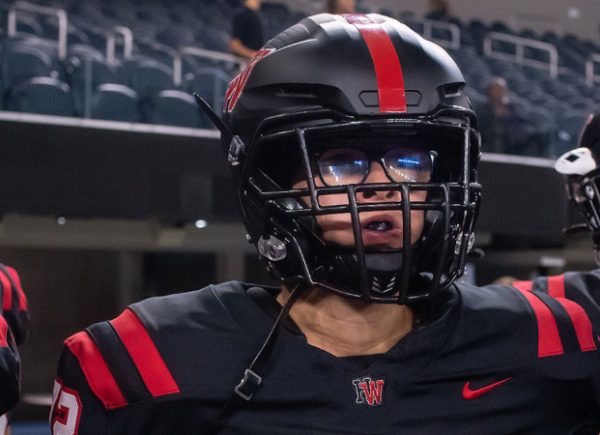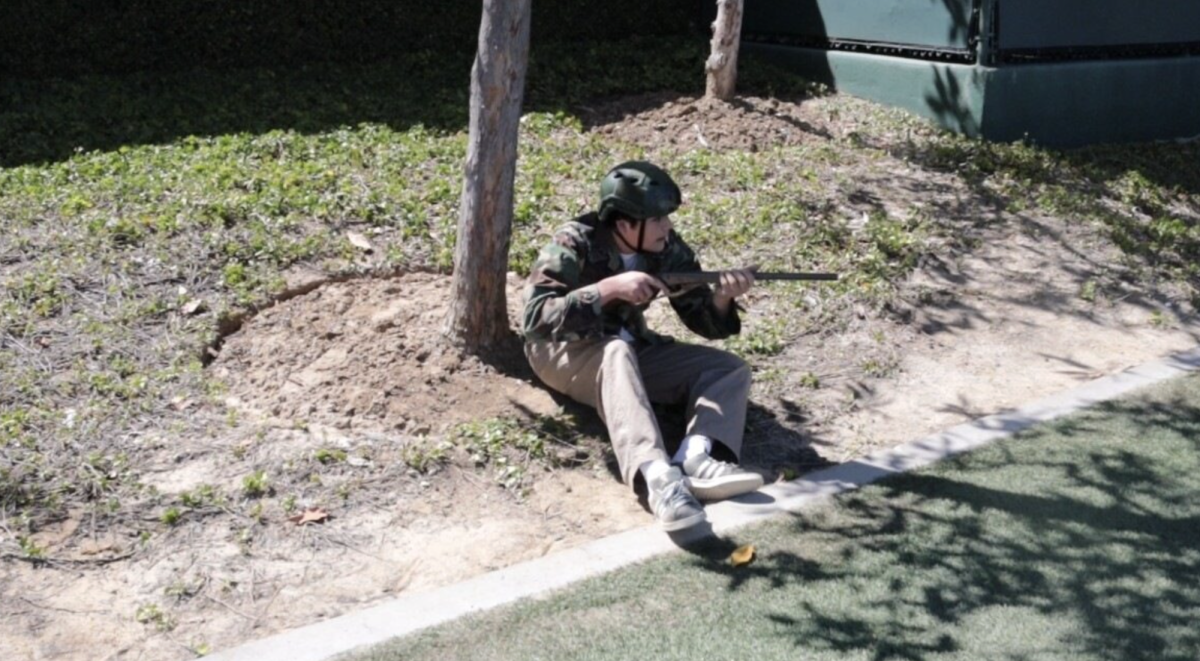
Earlier this month, Harvard-Westlake students Oliver Beraze ’29 and Jack Manuel ’29 were supervised across campus by a 9th grade dean, and the dean had to alert security, while transporting a fake World War I-style prop rifle for a short film project, highlighting how concerns over school violence have transformed even ordinary student activities into monitored situations.
The riflea was not a real weapon but a prop firearm that resembled a rifle used during World War I, the school authorities took it very seriously and cautiously.
Although at first glance, it might seem amusing or even surreal to the two students who were carrying the prop, it turned out to be a reflection of a much bigger picture, a representation of the current state of affairs in educational institutions all over the United States. In times when school shootings happen too frequently, lockdowns are conducted regularly, and fears related to safety concerns become a norm of life, even the most trivial item looks suspicious.
According to School Shooting Database, several hundred incidents concerning gun-related incidents occurred on U.S. school campuses starting from the Columbine shooting in 1999. As a result, nowadays, the policy regarding potential weapons is very tight across the country.
With the recent school-related incident in San Diego, where concerns over campus safety once again drew public attention to how quickly situations involving weapons — or suspected weapons — can escalate. Events like these reinforce why schools often respond aggressively to anything that could create panic or confusion, even if no actual danger exists.
For the students involved in transporting the prop firearm, the experience became unexpectedly emotional. Beraze said, “Honestly, I just think it’s sad that it’s we’re in such a dire situation that we have to have Deans and alert security just to make a short film with a firearm that looks like it’s from World War 1”
Beraze later commented on how strange it felt to require security supervision for what was meant to be a creative project.
When told about this situation, the Head of Middle School Jon Wimbish, talked about the climate of today’s uncertainty and fear. Mr.Wimbish said, “We don’t even want to take the risk of someone asking is that real or not, and having the chance of them calling the police or going into lock down”
Administrators also pointed to how dramatically school safety culture has changed over the past two decades. Mr.Wimbish later said, “This is the world we live in since Columbine, despite all we have in the science lab with chemicals, our biggest threat is an intruder”
Teachers echoed similar feelings, noting that precautions that seem extreme today would have been almost unthinkable years ago. Direct of Performing Arts at the middle school, Fredricka Irvine, said “Was interesting is maybe 20 years ago we wouldn’t have had to do that you could totally walk around but because there’s been so much school so many school shooting so much school violence we have to really take precaution and it actually is kind of sad you know that it’s something that we have to do but it’s also necessary and in a sense it’s good that the school is so Vigilant about it yeah yeah okay thank you”
This case raises the delicate balance between promoting creativity and freedom of expression for children while ensuring that they are not exposed to any fear, confusion, and potentially harm. At the beginning, for most of the students, the idea of being escorted by deans, and alerting security, across the school premises might seem to be an exaggeration.
However, in many ways, this incident seems more related to the time we live in than to those involved in it. Students growing up in an era full of active shooter alerts are aware of how careful students have to be over even a simulation.